


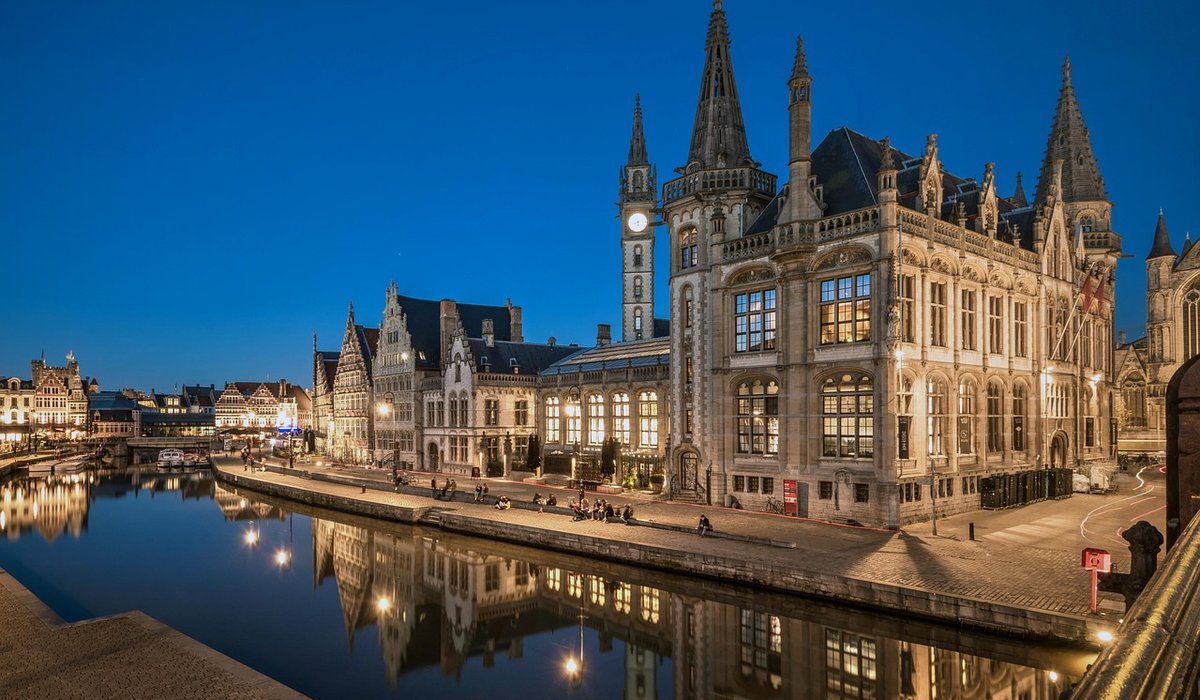
The Golden Age of the Canal Wharf
Stand on almost any towpath in Britain and you will eventually notice one: a long, plain, brick building with a row of tall doorways at water level and something that looks suspiciously like a crane bracket above them. That is a canal warehouse, and for roughly a century it was the beating heart of inland trade in this country.
Between the 1770s and the 1840s, canal mania transformed the Midlands and the North. Every junction, every basin, every terminus needed somewhere to move goods between boat and cart. The warehouse was that place. It was not simply a shed — it was a sorting office, a bonded store, a weighing station and often a home for the wharfinger, all wrapped into one practical structure. Towns such as Stourport, Shardlow, Stoke Bruerne, Wigan and Gloucester grew up around these buildings, and in Birmingham the canal network was lined with them for mile after mile.
Because canals carried almost everything — coal, grain, cheese, salt, timber, pottery, cotton, iron — the warehouses had to be adaptable. A building that handled corn one season might hold barrels the next. That flexibility is the reason so many have survived, and why they still make such good reading for anyone curious about how Britain actually worked before the railways.
Reading a Canal Warehouse
Once you know what to look for, these buildings become far more interesting than the average brick shell. A few features turn up again and again:
- Water-level doorways — often arched or squared off, positioned so a boat's hold could be unloaded straight into the building. Some sit below the towpath, reached by a short flight of steps.
- Upper loading doors with a projecting beam or a surviving crane gantry. Goods were hoisted up and tipped down through the floor, which is why so many have thick trapdoors and chutes.
- Cast-iron columns and fireproof floors in the grander examples, an early Victorian attempt to stop a warehouse full of grain, hemp or oil from burning to the ground.
- Rooflights and lantern roofs, so that sorting could carry on in daylight without candles or oil lamps.
- Pitching holes — small openings where goods could be tossed through rather than carried round.
- A lucam, the wooden projecting hoist housing that juts out from the gable end. Often timber-framed, sometimes weatherboarded, and almost always the most photographed part of the building.
Size tells you a great deal too. A modest two-storey warehouse with a single door served a small coal wharf. A five-storey brick giant with a weighing room and an office attached belonged to a carrying company or a merchant handling bulk cargo in a busy port such as Gloucester Docks or Ellesmere Port.
What Went In, and What Came Out
The variety of cargo is genuinely surprising. Alongside the obvious coal and grain, canal warehouses handled:
- Corn and malt, which needed dry, ventilated floors and usually a hoist and a weighing machine.
- Cheese and butter from the dairy counties, bound for industrial towns.
- Salt and Cheshire brine goods, corrosive enough to destroy floors and fixings over time.
- Timber, slate and stone, stored in open yards beside covered sheds.
- Pottery and glass, packed in straw and crates, needing gentler handling and a tally keeper at the door.
- Manure, night soil and lime heading out to farms — not the most fragrant trade, but a profitable one.
Many warehouses also served as gauging stations, where a boat's load was measured so tolls could be charged. The old toll houses and office windows overlooking the cut are part of the same story.
From Dereliction to Listed Landmark
The railways took the canals' long-distance trade from the 1840s onwards, and road haulage finished much of what was left a century later. By the 1960s dozens of warehouses stood empty, roofless or half-demolished, their wharves silting up and their arms filled in.
Rescue came from an unlikely alliance of enthusiasts, planners and local councils. The listing system gave many buildings statutory protection, usually at Grade II, with a few exceptional survivors at Grade I or II*. Conservation areas were drawn around the best dockland and canal-side quarters. Regeneration followed: Birmingham's canal network, Gloucester Docks, Sheffield's Victoria Quays, the Rochdale and Ashton canals all gained new life from buildings that had been written off.
Today most former warehouses are in active use again — apartments, offices, museums, pubs, workshops, boatyards and marinas. The conversion is rarely straightforward, because the very features that make them interesting (narrow boat doors, low beams, unheated upper floors) make them awkward to modernise. Sensitive schemes keep the loading doors, the hoists and the brickwork, and treat them as part of the design rather than an obstacle.
Seeing Them from the Water
If you are cruising, the best view of a canal warehouse is from the stern of your boat, looking back. A few practical pointers make the experience richer:
- Slow right down beside an old wharf. The water is often shallower there because of historic silting, and you will see the water-level doorways properly.
- Look for the ghost of a crane beam or a worn stone kerb where boats once lay. That tells you exactly where the working face was.
- Moor considerately near listed buildings — pins in soft wharf edges do damage, and some stretches have restrictions.
- Visit the small canal museums and heritage centres along the way; they often hold the tally books, plans and photographs that explain what you are looking at.
- Walk the towpath in winter, when the vegetation dies back and the brickwork is easiest to read.
These buildings are among the most honest pieces of industrial architecture we have. They were built to do a job, they did it well for generations, and a surprising number are still standing — quietly useful, and well worth a second glance as you pass.


Leave a reply